Tuesday, 19 March 2019

Understanding the different types of storms

A storm is a severe weather condition that involves strong winds, rain, thunder, lightning, and snow. This force of nature can cause destruction to lives and property. Scientists such as former KCOY weatherman Jim Byrne aim to educate people on these events so that they would know how to prepare and adapt when the need arises. Here’s a guide to the different types of storms:

Image source: Pexels.com
Tropical cyclone

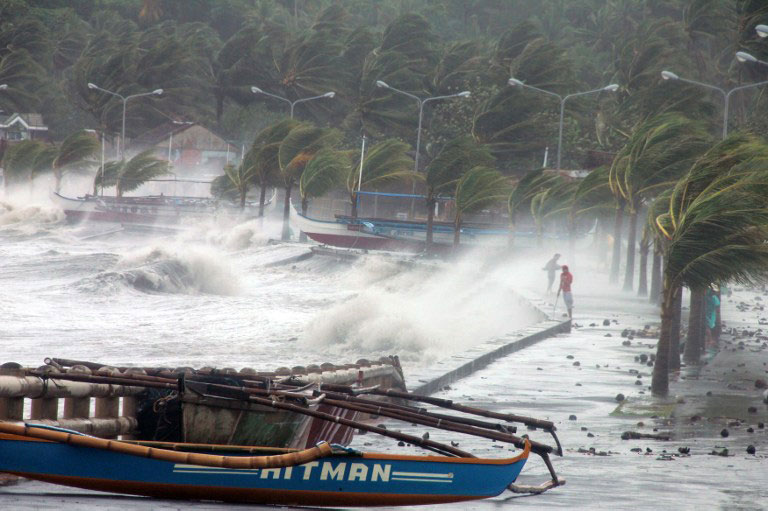
This phenomenon is characterized by a series of thunderstorms that produce heavy rainfall in low-pressure areas. Also known as a typhoon, tropical depression, or simply cyclones, these series of storms can become intense depending on low pressure and rapid winds. This storm can take several hours to days before it gains strength to become a hurricane. Moist air, converging winds, and warm surface temperature contribute to its intensity.

Image source: Pexels.com
Hailstorm

Professionals such as KCOY weatherman Jim Byrne have witnessed the formation of hailstorms in the U.S. that caused massive damage to properties. Instead of just battling rainfall and strong winds, people have to be extra cautious with hail. These icy stones form due to frozen precipitation caused by rapid currents of air going upwards and downwards during a thunderstorm.

Tornado

The windstorm is caused by a severe thunderstorm that moves from southwest to northeast, causing rotating columns of air that touches the earth’s surface and a cumulonimbus or cumulus cloud. The powerful and high-speed winds can bring destruction as it can push debris and other elements in its path.

Understanding these weather disturbances is crucial in disaster preparedness efforts. Knowing the differences between these storms will help people plan and strategize accordingly.

Jim Byrne is a weatherman serving as a consulting meteorologist for the Weather Channel program “So you think you’d survive.” He served as both the chief meteorologist for KCOY CBS-12 and as a freelance weekend meteorologist at NBC Bay Area. Visit this page for updates.

Friday, 15 February 2019

Countries with the most extreme weather conditions

Weather conditions define countries, and some have more extreme and unusual weather conditions than the next. To give you a rundown, here are examples of meteorologically challenged countries, with their populations experiencing extreme weather shifts and characteristics.

Image source: smh.com.au
United States of America. According to a report by National Geographic, hurricane-force winds are present for more than 100 days per year in New Hampshire alone.
India. Mawsynram in India’s Maghalaya state receives the most rainfall each year, according to Guiness World Records. The rain falls during its monsoon season between June and September, and receives 12 meters of rain annually. The hilly village of Cherrapunji comes a close second in terms of rainfall, with over 26 meters of recorded rainfall from August 1860 to July 1861.

Image source: smh.com.au
Ethiopia. Ethiopia’s Danakil Depression has the highest average temperatures in the world: 34.4 degrees Celsius below sea level and has little to no rainfall. It is considered one of the hottest places in the world.

Russia. If you can’t handle the cold, then Russia’s Sakha Republic is no place for you. Considered as the coldest permanently-inhabited places, the average temperature goes below minus 50 degrees from October to April. An electronic thermometer was installed as a tourist attraction, which broke almost immediately because it couldn’t handle the cold.

Weatherman Jim Byrne currently works as the meteorological consultant for the Weather Channel program “So you think you’d survive.” Having taken up meteorology and journalism at San Jose State University, he served as the chief meteorologist at KCOY CBS 12 and was a freelance weekend weather reporter for NBC Bay Area. For more articles like this, visit this page

Friday, 11 January 2019

The science behind a storm surge

The dominant and pervading notion is that storm surges are like tsunamis. This means that many still think they are a wall of water of sorts. In truth, storm surges are, as the name implies, caused by strong and prolonged winds of a hurricane or typhoon battering the shore. In this sense, it’s better to call them domes of waves that form as the ocean or sea is pushed onto land.
Image source: wlos.com
 These high-water formations essentially translate to the raising of the ocean, coming in with the normal inflow of tides. Hurricanes are devastating enough, but residents of near-ocean areas should be extremely wary not just of the high winds that can uproot trees and houses, but the flow of ocean water inland that may accompany the most severe of such storms. For example, it’s the storm surge and its accompanying water that killed nine out of 10 people when Hurricane Florence hit the U.S.
Image source: science.howstuffworks.com

Studies done by meteorologists on hurricanes that have formed on U.S. waters between 1963 and 2012 show an alarming statistic: a whopping 49 percent of hurricane-related deaths in the country soil is a result of storm surges. Only 27 percent of the loss of lives was due to rain, eight percent from wind, and three percent from tornadoes, according to the National Hurricane Center.

One of the most destructive storm surges occurred in the Philippines during the landing of Typhoon Haiyan in the southern city of Tacloban in 2013. Not only was Haiyan among the strongest storms ever recorded— it is by far the deadliest to have hit the typhoon-prone nation, killing at least 6,300 people mostly due to drowning brought about by heaps of ocean water poured into the highly unprepared city.

Jim Byrne is a weatherman and a consultant for the program “So You Think You’d Survive” under the Weather Channel. He and former chief meteorologist for KCOY CBS-12. He took up meteorology and journalism at San Jose State University. Visit this Youtube channel for some of Jim’s reports.

Friday, 28 December 2018

Flash flood prepping: A quick refresher

Flash floods are a reality for many homeowners across the country. In fact, because of the recent frequency of extreme weather, more places have been experiencing flash floods than in the past decades.

Because of this, we’ve thought it prudent to once again give a quick refresher on how to prepare for flash flood and not be caught unawares.

Image source: CNN.com
The emergency kit
Every household should have an emergency kit. In it should be first-aid kits, toiletries, medicines, beddings, non-perishable food, water, clothes, flashlights, matches, transistor radios, batteries, whistles, pocket money, and ID cards. Experienced preppers recommend having one emergency kit per adult at home.

Weather reports
Image source: eco-business.com
To be up to date, people should always stay tuned to the radio or TV or any online news outlet, especially amidst sudden heavy rainfall. If people live near a dam, there should be regular updates on the status of the structure during severe weather conditions. If news reporters tell people to evacuate, homeowners should not give the injunction a second thought.

Have an escape plan
People should always have an escape plan in view of different kinds of disaster. They should know where to go when disaster strikes. For areas that experience flooding, residents should have a clear idea of the location of and the fastest, safest route towards the higher ground.

Jim Byrne is a weatherman serving a consulting meteorologist for the Weather Channel program “So you think you’d survive.” He is an alumnus of San Jose State University and is an appointed member of the Community Advisory Council for the Santa Barbara County Air Pollution Control District. Read more about weather phenomena on this page.

Wednesday, 5 September 2018

How Space Weather Affects Earth And Its Climate

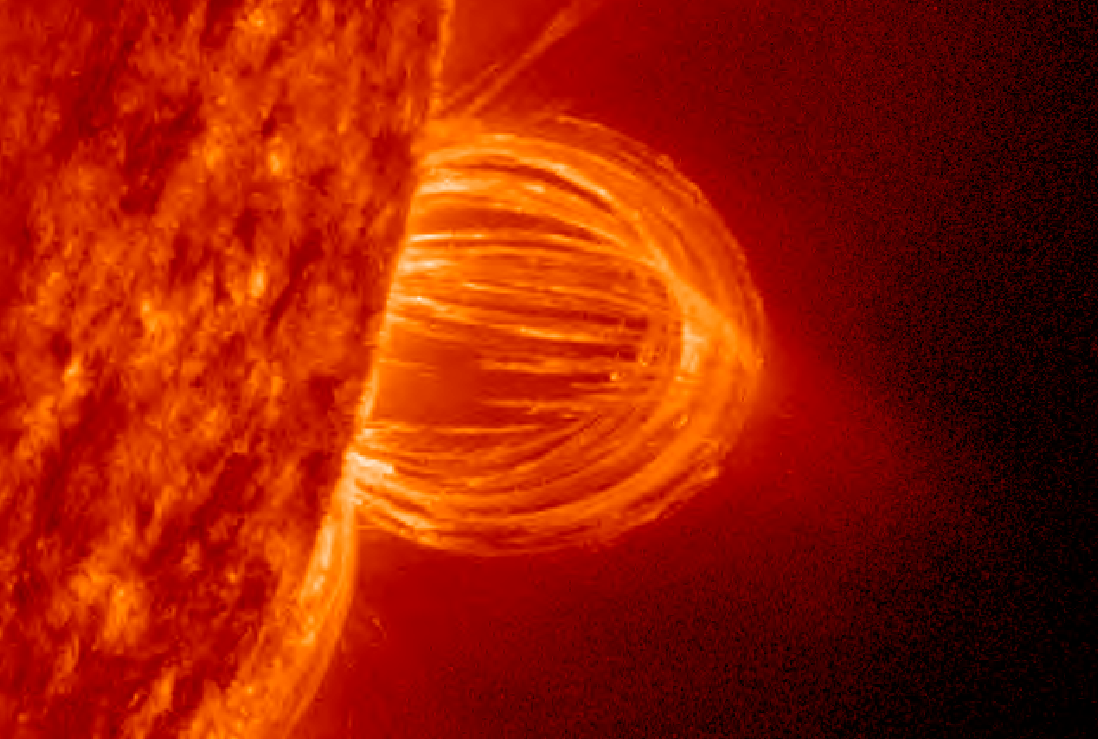
It doesn’t normally take up space on primetime news, but space weather affects life on Earth in more ways than one. What we call space weather refers to events on the sun that can disrupt Earth’s communications, overload power grids, become potentially hazardous to astronauts, and affect weather patterns, according to NASA.

Image source: SpaceNews.com

Accelerated particles from the sun as well as other galactic sources continue to bombard Earth. Space weather storms can disrupt and damage modern and technologically complex systems, such as communications, transportation, and electrical power systems. Space weather can also change Earth’s weather and climate, although there isn’t comprehensive knowledge on this influence yet.

The planet’s magnetic field serves as its radiation shield. The magnetosphere keeps most of space weather effects where they should be -- safely out in space. Some radiation, however, are able to reach orbiting satellites and astronauts, as well as people inside aircraft and sometimes even those on the ground. Energetic particles, too, can destroy satellites and reduce their intended lifespans. 

NASA’s Advanced Composition Explorer (ACE) is a spacecraft carrying nine instruments, each designed for observing various aspects of the solar and galactic environment. It detects information on the energy, speed, and magnetic field of every solar disturbance heading toward Earth, transmitting radio warnings to people up to an hour before their arrival. Scientists, meanwhile, continue to probe space weather’s further impact on Earth and its global climate.

Image source: Blogs.Nature.com

Jim Byrne is a weatherman serving a consulting meteorologist for the Weather Channel program “So you think you’d survive.” He is an alumnus of San Jose State University and is an appointed member of the Community Advisory Council for the Santa Barbara County Air Pollution Control District. Read more on this page.

Thursday, 9 August 2018

What Causes a Heat Wave And Is It Related To Climate Change?

A heat wave refers to both a prolonged period of high temperature and excessive humidity.  Heat Index Values are used to determine if the heat in a particular period is already excessive, which is essentially the measurement of apparent temperature or the effect of temperature on the human body when humidity is factored in. 

A heat wave happens when high atmospheric pressure system moves into a particular area, pulling air from the upper levels of the atmosphere toward the ground.  This air becomes compressed as it nears land and creates high levels of humidity.  Because of the pressure’s concentration, other weather systems are unable to replace it; rainclouds and cooling winds are pushed away.  A heat wave can thus last for days or even several weeks. 

Image source: brecorder.com
It’s important to note that while heat waves are yet to be completely linked to climate change, they are weather phenomena that over time could signify the warming of the planet.  This is especially true in recent years, with the increase in the frequency of heat waves throughout the world. 

There have been record highs in temperatures in recent years, evidenced in North America by increased occurrences of heat waves in Canada and the United States.  An interesting trivia to remember here is that these high-temperature events kill more Americans than other natural disasters like lightning, floods, tornadoes, or storms.  Children and adults over 65 years of age are especially susceptible to heat exhaustion and stroke. 
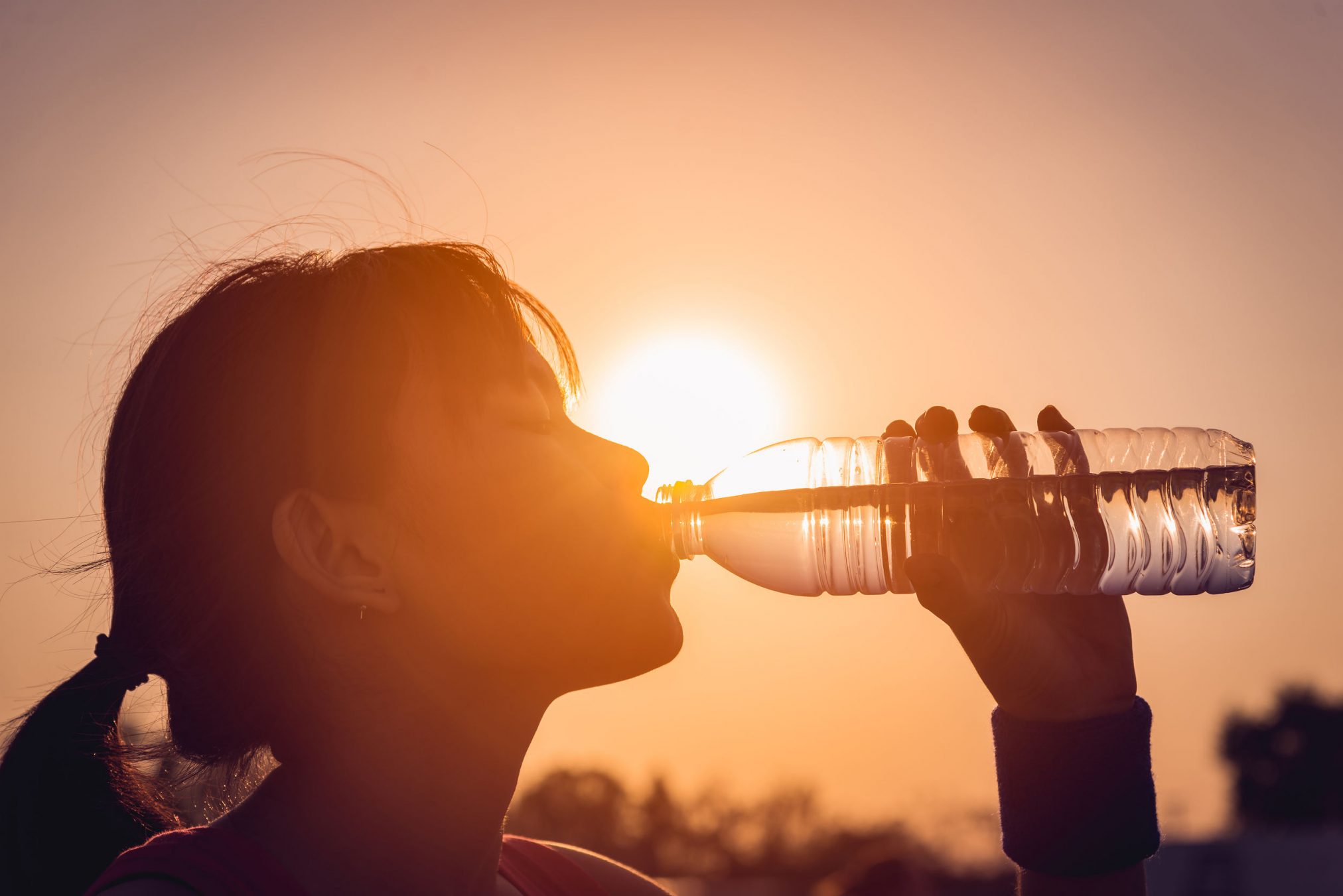
Image source: ajp.com.au

Weatherman Jim Byrne is an alumnus of the San Jose State University. He is formerly the chief meteorologist at KCOY CBS-12 and a weather reporter for NBC Bay Area. Know more about Jim’s work and advocacies here.

Friday, 6 July 2018

What Is The Summer Solstice? Here Are Interesting Facts

It’s commonly known as midsummer, immortalized in many works of art and literature.  But the summer solstice actually takes place when one of the Earth’s poles keeps its maximum tilt toward the sun.  It occurs twice a year, one in the Northern Hemisphere and another in the Southern Hemisphere.  Here are interesting trivia about the summer solstice.

Astronomers can calculate an exact moment for the solstice, when the planet reaches the point in its orbit where the North Pole is angled closest to the mighty sun.  This year, that moment was at 6:07 a.m. Eastern time on June 21, and from Earth the sun appeared farthest north relative to the stars.


Image source: Collective-Evolution.com 

There are many world traditions built around the summer solstice.  In the Northern Hemisphere, it’s historically linked to awakening libidos.  Small wonder: it tends to kick off the beginning of the summer season accompanied by the harvest.  Naturally, the solstice will be linked to fertility in many places around the world.

The Scandinavian tradition of celebrating midsummer involves dancing around a maypole, a symbol viewed by some as phallic, as well as having huge feasts over herring and vodka.  In Greece, the pagan solstice has been co-opted by Christianity and called St. John’s Day, with ancient rites conducted in many villages.

Perhaps among the biggest solstice celebrations found anywhere is the one held at Stonehenge in England, where thousands converge every year to usher in the summer season.  Don’t forget the variety of bonfires, festivals, and Fête de la Musique celebrations in different parts of the globe.


Image source: Vox.com 

Jim Byrne currently works as the meteorological consultant for the Weather Channel program “So you think you’d survive.” He served as both the chief meteorologist for KCOY CBS-12 and as a freelance weekend meteorologist at NBC Bay Area. Read more about weather phenomena on this page.

Monday, 11 June 2018

Bomb Cyclone winter storm explained

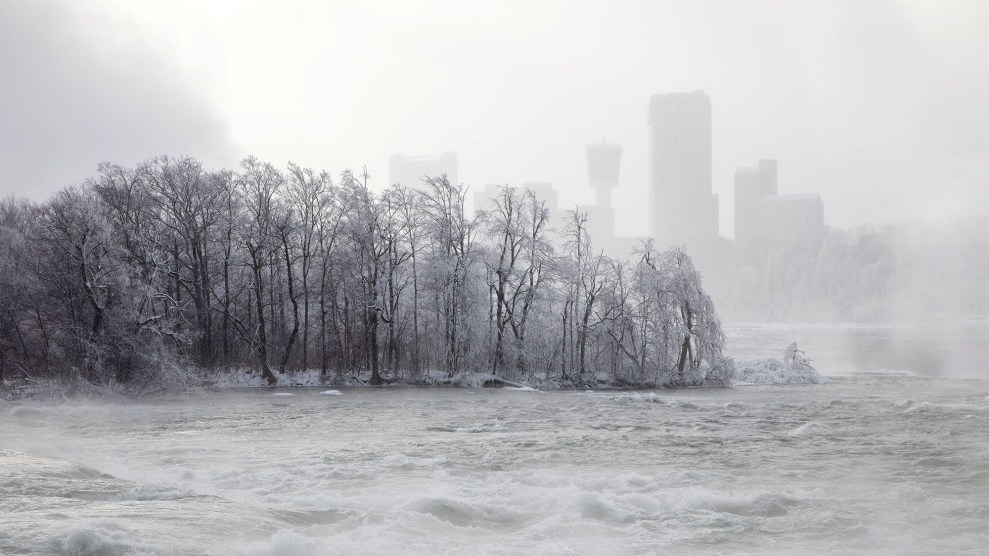
One of the more major meteorological occurrences reported in recent times is the bomb cyclone. People all over the East Coast were given ample warning regarding this development but what they experienced was something no one saw coming as entire cities froze. 

Image source: motherjones.com

Bomb cyclones refer to bombogenesis, a meteorological phenomenon that occurs when a storm’s minimum central pressure goes down by at least 24 millibars within 24 hours. Although bomb cyclones are supposed to be common in the fall and winter in the East Coast, they have greatly exceeded the intensification rate, almost doubling it. 

These hurricanes become stronger due to the lower air pressure. The rapid pressure drop draws air into the storm’s circulation. As the air spirals inward toward the center, rises, and exits to the top, the further the storm grows. Drops in air pressure also cause extreme wind conditions. 

Bomb cyclones bring heavy, wet snow and powerful winds. This combination can easily cause power outages. What makes bomb cyclones more worrisome is the fact that they can turn small clouds into massive storms within 24 hours. They are supposedly rare, but they are becoming a common occurrence these days due to global warming. 

Image source: pymnts.com

Weatherman Jim Byrne currently works as the meteorological consultant for the Weather Channel program "So you think you’d survive." He took up meteorology and journalism at San Jose State University and served as the chief meteorologist at KCOY CBS 12 and was a freelance weekend weather reporter for NBC Bay Area. For more insightful reads on the weather, visit this page.

Thursday, 10 May 2018

Meteorology 101: Hurricanes, Typhoons, And Cyclones

Hurricanes, typhoons, and cyclones are all names given to the same type of extreme weather disturbances, intense lower-pressure systems that bring in powerful winds and rain and can potentially cause millions of dollars in damage once they hit land. But just what are their differences, and why give them different names?

Image source: earthsky.org


The term used by meteorologists for these developing weather disturbances is tropical cyclone. A tropical cyclone is born when moisture, warm tropical waters, and light winds combine with a weather disturbance. As the winds of the tropical cyclone get stronger, the closer it gets to either being a cyclone, hurricane, or typhoon. The target wind speed is 75 miles per hour. Once it hits that, the name changes, into one of the three.

And once the newly-formed hurricane, typhoon, or cyclone sustains its conditions over a given period, it brings on new and more devastating conditions such as torrential rains, and huge oceanic waves.

So, why the need for three different names? The names were coined to distinguish the location of the weather disturbance.

Hurricanes happen over the Atlantic and Northeast Pacific. Typhoons, on the other hand, form over the Northwest Pacific. Cyclones occur in the South Pacific and Indian Oceans.

Image source: rappler.com

Weatherman Jim Byrne serves as a consultant for the program “So You Think You’d Survive,” now under the Weather Channel. An alumnus of San Jose State University, he has also served as the chief meteorologist at KCOY CBS-12. More on Jim’s work here.

Wednesday, 4 April 2018

What Exactly Is The La Niña Phenomenon?

La Niña is a climate pattern phenomenon that pertains to the cooling of surface ocean waters along the tropical west coast of South America. La Niña is the counterpart to El Niño wherein the equatorial region of the Pacific Ocean are marked by unusually warm ocean temperatures.

Image source: independent.co.uk


In some areas of the world, La Niña causes increased rainfall. Conversely, it generates extremely dry conditions in other regions. The conditions that cause La Niña recur every few years and can last for as long as two years. El Niño occurs every two to seven years, and La Niña sometimes follows El Niño. In the past, La Niña has been called the anti-El Niño and El Viejo, which means “old man” in Spanish.

The phenomenon happens when the easterly trade winds get stronger and blow more warm water west allowing cold water below the sea’s surface. It thus pushes toward the top near the South American coast, replacing the warm water. This means that the easterly trade winds are to be blamed for partly causing La Niña.

Image source: nydailynews.com


When La Niña occurs, the sea surface temperatures across the eastern and central Pacific Ocean tend to be lower than the typical 3 to 5 degrees Celsius. The main effects of La Niña include increased rainfall, catastrophic flooding, and drier than normal conditions.

Jim Byrne is a weatherman and former chief meteorologist for KCOY CBS-12. For more on his work and interests, visit this blog.

Monday, 12 March 2018

NASA’s Role In Weather Forecasting

Image source: NASA.gov
Earth science is one area of focus of the National Aeronautics and Space Administration (NASA), which includes studying Earth’s weather system such as the dynamics of the atmosphere and its interaction with the land and oceans. Through its expertise and technology, weather, ranging from local to microphysical processes, can be predicted with a fair degree of success at about a maximum of two weeks prior.

NASA deems improved knowledge of weather processes and phenomena a crucial ingredient of understanding Earth further. In addition, there is an infrastructure in the United States for operational meteorology at NOAA, the FAA, the DoD, and other agencies requiring the introduction of new technologies and knowledge that only NASA can develop.

NASA contributes to national weather forecasting goals primarily through developing and using data from space-based sensors. For over two decades, satellite-based profiles of temperature and moisture have been regularly used in forecasting, while new NASA sensors promise to upgrade accuracy and spatial resolution.

Image source: ClimateCentral.org
Other technologies supporting weather, as developed by NASA’s earth science division, include the In-Space Validation of Earth Science Technologies (InVEST) program (RainCube and CIRis) and the EV class missions such as CYGNSS and TROPICS.

As a recent development, NASA’s Joint Polar Satellite System (JPSS) comprises four weather satellites that will provide advanced forecasting on not only hurricanes but also dangerous weather events that threaten communities across the country.

Weatherman Jim Byrne is a consulting meteorologist at the Weather Channel program “So you think you’d survive.” An alumnus of San Jose State University, he had also been the chief meteorologist for KCOY CBS-12 and a freelance weekend meteorologist at NBC Bay Area. Read more on this page.


Saturday, 10 February 2018

Can You Predict The Weather By Yourself?

Image source: tematicaresearch.com
Some people might wonder if they can predict the weather without having to rely on forecasts. If you are one of those who do, the simple answer is yes. Here are some ways to do it:

Observe the direction of the wind: How the wind blows can be indicative of approaching weather. If the wind moves in from the west to the east, that could be an indicator that the weather would be good, while wind going in the opposite direction suggests that bad weather is coming. Another thing to watch out for is the behavior of smoke from a fire. If it does not rise steadily and spirals back down, it means that there is low pressure and that it will rain soon.

Watch out for the “calm before the storm”: There is a reason that expression came to be. Looming bad weather means there is low pressure, and this pushes out normal wind patterns, leading to lack of wind on the ground and calm or still water. The brightness of the moon may also be an indicator, as low pressure clears out dust that would have covered the moon a little bit.

Image source: almanac.com
Check out animal behaviors: Animals are capable of determining if bad weather is on the horizon. For example, ants build up their hills so that the sides would be steep to divert rainwater. Birds fly lower than usual or perch at branches nearer the ground because low-pressure air irritates them. Insects, particularly bees and butterflies, become less visible as they have already returned to their home for safety.

Jim Byrne is a weatherman who currently serves as a consulting meteorologist for the Weather Channel program and is the former chief meteorologist at KCOY CBS-12. To see more discussions about the weather, check out this Facebook page.


Friday, 15 December 2017

The Lighter Side: Amusing Conspiracy Theories About The Weather

While the weather as a whole is a serious matter, it helps that once in a while people take a break and find some humor and entertainment in it. There are countless pop culture references pertaining to the weather. Entire disaster movies have been built around its theories and concepts. Let’s take a look at one of the more amusing aspects of weather – the conspiracy theories.

Image Source: guardian.ng

The European Rain Thieves

Mahmoud Ahmadinejad was known to be a conspiracy freak. Many have also considered him to be deranged. But that didn’t stop Iran from making him president. One of the most famous conspiracy theories Ahmadinejad came out with during his regime was that of European nations actually stealing rain.

Ahmadinejad theorized that the countries of Europe had come up with a device that drained rain clouds over Iran and took them westward to Europe.

Fair Radiation Servings

Solar radiation management, otherwise known as SRM, refers to a set of methods and techniques that help lower radiation from the sun. The primary means of SRM is to spray chemicals that reflect radiation back into space. While governments all around the world have applauded this effort to reduce radiation, global warming, and climate change in general, conspiracy theorists are quick to suspect that there are sinister intentions behind this, and that countries are using SRM to control weather and use it as a weapon.

Image Source: watchers.news

Jim Byrne is a consulting meteorologist for the Weather Channel show “So You Think You’d Survive” and an active member and past president of the Rancho Maria Men’s Golf Club. He is the former chief meteorologist for KCOY CBS-12 and freelance weekend meteorologist at NBC Bay Area. For more updates from Jim Byrne, click here.

Wednesday, 15 November 2017

Kicking In The Rain: Tips For Playing Soccer In Bad Weather

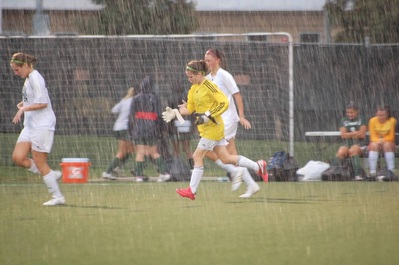
For dedicated athletes, playing in the rain brings excitement and a whole other level of performance. Yet, doing so might result in accidents that could hinder them from playing for a long time. Slips and other risks should be avoided if one decides to play in bad weather.


Image source: unsplash.com

While there are many indoor courts soccer players can play in, the quality of turf isn’t the same as the one outdoors. The pleasant experience of playing in real grass while the sun is out is what soccer players are after. Rains may strike in the middle of the game, and if there are no lightning strikes and heavy winds, a game may continue. The following tips may guide players how to their game safe even in bad weather:

  • Put more pace on the ball - During heavy rains, the grass becomes sloppy, and a ball might get stuck during a pass. Pass harder to get the ball to target player.
  • Play the ball in the air - The ball moves slower on the ground and playing more direct can give a team fewer chances of being intercepted by the opposing team.
  • Slide tackle - When the grass is wet, a player’s risk of being scraped by the surface is lessened. During the rain, it’s much easier to do this defensive skill.
  • Be mindful of the skip - A ball may skip because of the layer of water in the grass. Know where to place the ball and how to run with it.


Weatherman Jim Byrne is a consultant for the Weather Channel program “So you think you’d survive” and a former chief meteorologist at KCOY CBS-12. For more weather discussions, visit this blog.


Monday, 30 October 2017

Preparing the home for a blizzard

Blizzards are nasty events that nature designed to wreak havoc on entire cities during the winter time. As such, a lot of preparation is needed to help people get through these snow storms. If a home is not ready to cope with the weather, the results are oftentimes disastrous. Here are a few pointers in preparing for a blizzard. 


Image source: mashable.com

  • As soon as people receive reports of an incoming blizzard, they should prepare all their lanterns and rechargeable lamps. It’s highly recommended that every household have a wind-up lamp. 


  • People should also have transistor radios ready so even with the electricity cut off, they can still gather the latest developments from the storm. 


  •  Communication devices such as phones and walk-talkies should be charged so people can talk to their loved ones and see how they’re doing. It’ll also come in very handy when people experience an emergency and need help themselves. 


  • Having the home equipped with a freeze alarm can be useful during the winter months. If a person is on their way home and they get notified through the app that their house has lost power and there’s a sudden drop in temperature, they may look for other options to kill time. 

Image source: wordpress.com

Jim Byrne is a weatherman and former chief meteorologist for KCOY CBS-12. Learn more about him and his work by checking out this blog.

Wednesday, 30 August 2017

The strongest storms in recorded history

Forces of nature are fascinating and terrifying at the same time. Perhaps no other calamity is as far reaching and affects as much of the world as oceanic storms. Throughout history, storms have come out from the oceans to batter those living on land. Early civilizations would even come up with legends of how gods and monsters would conjure these destructive winds and rains. More modern societies have studied these patterns and have devised countless safety measures to minimize destruction of property and loss of life. 

Image source: livescience.com

Let’s take a short look at two of the strongest storms in recorded history. 

Typhoon Nancy 

The undisputed strongest typhoon in history, based on the strength of her winds, Typhoon Nancy brought a path of destruction that many governments and research centers still study up to this day. The debate though is whether the info on her is reliable. What was more devastating was that it sustained her strength for over five whole days, which is a record. 

Typhoon Violet 

Typhoon Violet at its strongest was one of the most intense storms ever recorded. Only Nancy was stronger. One fortunate fact about Violet was that it didn’t last long. Whereas Nancy held the record for lasting the longest as a category 5 typhoon, Violet died down after only a few days.

Image source: nbcnews.com

Jim Byrne is a seasoned weatherman and the former chief meteorologist for KCOY CBS-12. For more fascinating discussion on the weather, check out this blog.

Monday, 17 July 2017

The Fundamental Workings Of The Wind

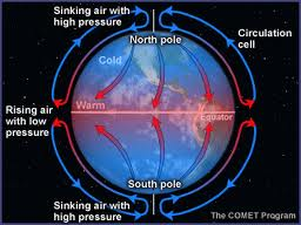
Weather is caused by the interplay of the sun, the air, and water. The most fundamental of its forces is the wind, the movement of air from one place to another. The very movement of the wind influences the pattern of the weather. Winds carry water vapor up to the troposphere, where it condenses into clouds, which are then carried across vast distances. Surface currents, themselves part of a complex conveyor of warm and cool water across the Earth’s oceans, are driven in part by the winds.

Image source:convectioncurrentscienceproject.weebly.com


All air is constantly in motion: wind is rapidly moving air, caused ultimately, by the actions of the sun and influenced by the interplay of heat and pressure. As the sun rises, the air is gradually warmed. As a gaseous mixture, warm air expands—losing density and pressure—and rises. Air from higher pressure (usually cooler) areas thus moves in to fill the void left by the rising air.

Because of the role played by pressure in creating wind movement, measuring the pressure of air has become a staple part of meteorology. Detecting areas of low pressure can allow meteorologists to predict the likelihood of stormy weather accurately.

Image source:physicalgeography.net

The winds experienced every day are rather subtle differences in pressure, the result of the fluctuations caused by sunlight over the course of the day. Stronger winds are caused by much more concentrated differences in pressure, such as those experienced when warm air currents from the tropics collide with cooler air from the poles, creating an immense turbulent movement that, in the right conditions, would turn into a storm.

Jim Byrne is a seasoned weatherman and the former chief meteorologist for KCOY CBS-12. This blog shares more updates on the fundamentals of the weather.